Updated December 19, 2025 By Rim El Helou & Lamia Ghernati
A science-based guide to timing, balance, and routines during the holidays
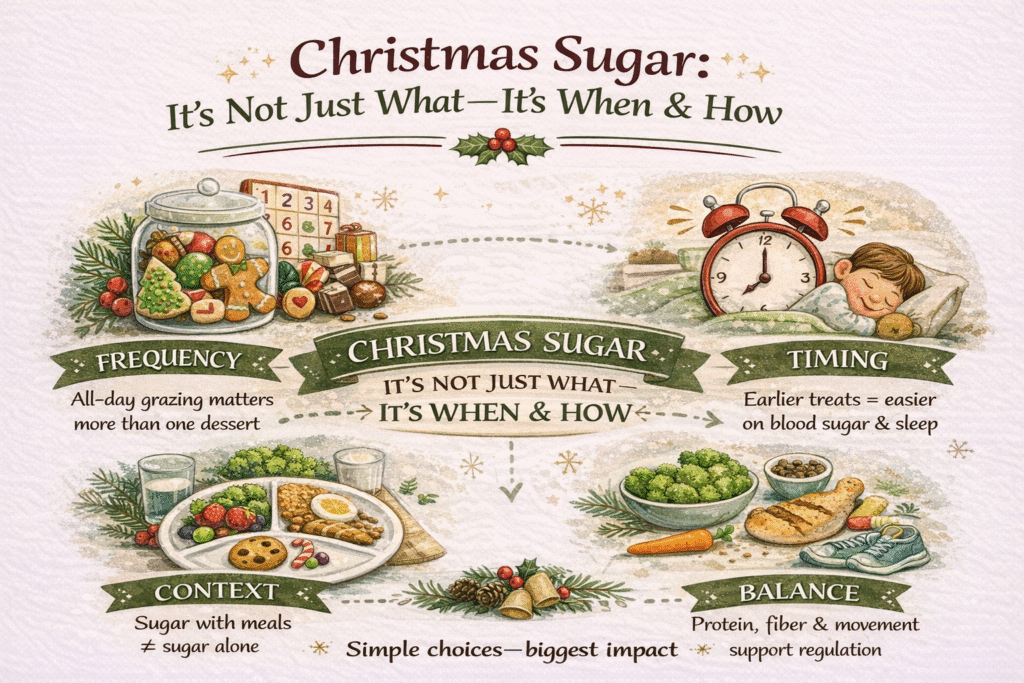
Christmas is a magical time for children: lights, music, celebrations, family gatherings… and treats everywhere. Cookies, chocolates, hot cocoa, gingerbread houses, candy canes. Sugar seems unavoidable.
For many parents, this raises concern:
Is this too much sugar? Will it affect my child’s behavior, sleep, or health? How do I keep balance without turning food into a battle?
The answer is not banning treats, it’s understanding how the body and brain respond to sugar, and learning how to create balance without stress or guilt.
This article will help you navigate the Christmas sugar frenzy with science, clarity, and confidence while keeping joy at the center.
🎄 Christmas Creates a “Perfect Storm” for Sugar Overload, Here’s Why
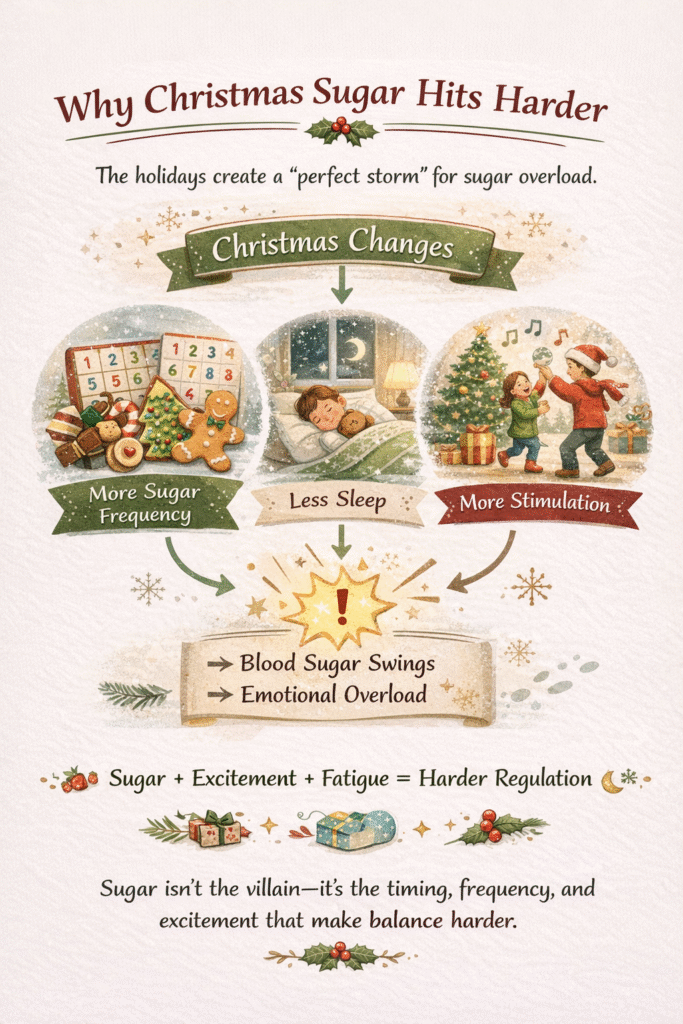
The issue at Christmas isn’t sugar itself it’s how often and in what context it’s consumed.
During the holidays, children experience:
- 🎁 Constant availability of sweets (not just dessert)
- ⏰ Disrupted routines (later meals, skipped meals, grazing)
- 🧠 High stimulation (excitement, noise, screens, visitors)
- 😴 Less sleep and more fatigue
- 🚶♀️ Less regular movement
From a physiological perspective, this combination makes it harder for the body to regulate blood sugar smoothly.
Frequent sugar intake without enough structure can lead to:
- Rapid blood sugar spikes
- Energy crashes
- Irritability, restlessness, or emotional outbursts
- Stronger cravings for more sugar
👉 Important: this doesn’t mean sugar is “bad.”
It means frequency, timing, and balance matter more than the treat itself.
🍬 Sugar Is Not the Enemy, Context Is
Sugar is part of celebrations, culture, and tradition. Christmas cookies and hot chocolate are not just food they represent connection, comfort, and shared memories.
From both nutritional and behavioral science, we know that:
- Restriction increases desire
- Forbidden foods become more attractive
- Guilt around food disrupts self-regulation
When treats are allowed calmly and intentionally, children are less likely to obsess over them and more likely to develop a healthy long-term relationship with food.
🎄 The goal is not to eliminate sugar it’s to place it in a context where the body can handle it well.
🧠 Why Labeling Foods “Good” or “Bad” Backfires
Children interpret language very literally. When foods are labeled “bad,” children may:
- Feel guilty for wanting them
- Believe they are “bad” for eating them
- Become more fixated on restricted foods
This is not just emotional it’s behavioral science.
Instead, use neutral, educational language:
- “Some foods give us long-lasting energy.”
- “Some foods are fun for celebrations.”
- “All foods can fit into our week.”
This teaches discernment instead of fear, and supports internal regulation rather than control.
🍽️ The Science of Balance: Why Treats Work Best With Meals
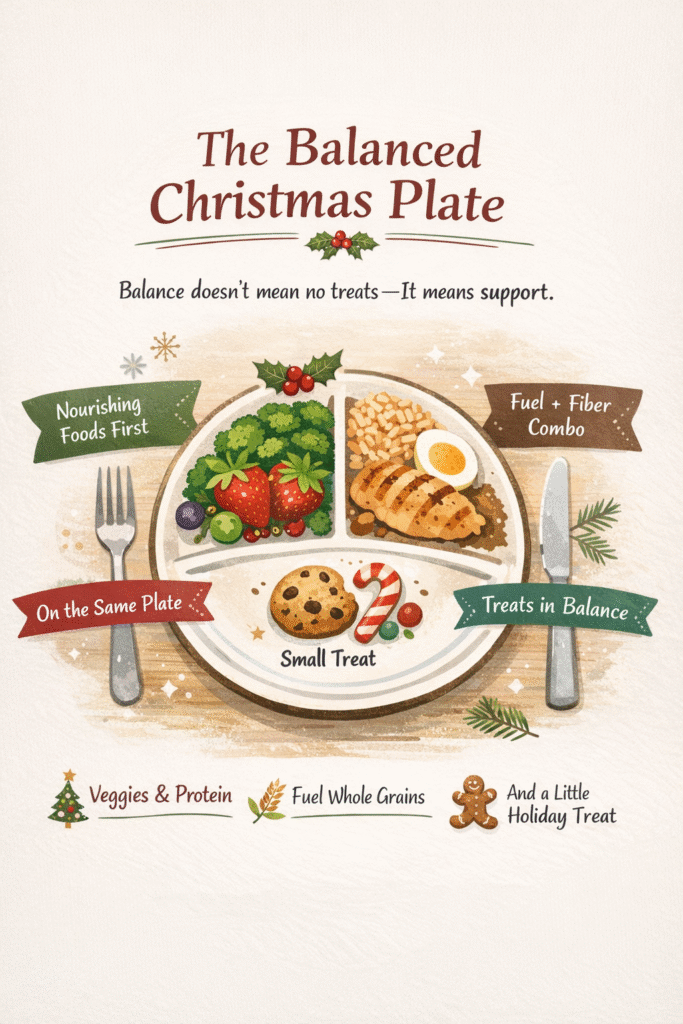
One of the most effective (and least stressful) strategies is to offer treats alongside meals, not as rewards or something to “earn.”
Why this works physiologically:
- Protein, fiber, and fats slow sugar absorption
- Blood sugar rises more gradually
- Insulin works more efficiently
- Energy and mood stay more stable
For example: placing a cookie on the same plate as fruit, protein, and grains often reduces fixation on the cookie, because the body feels nourished.
👉 This isn’t about controlling portions it’s about supporting the body’s natural balance mechanisms.
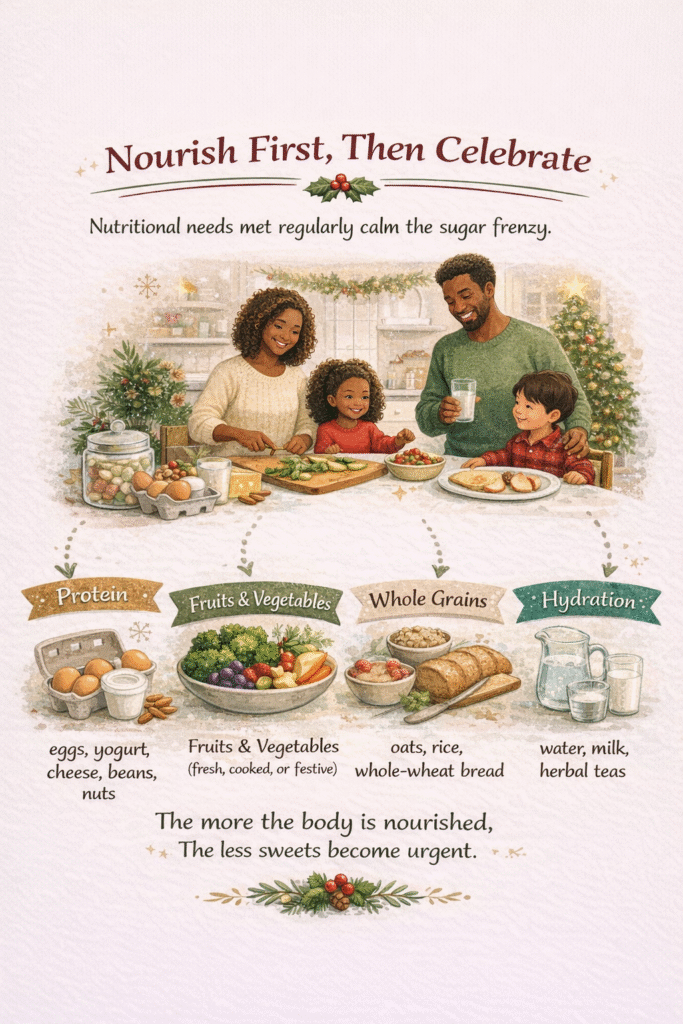
🥗 Nourish First, Then Celebrate
Balance doesn’t mean cutting sugar it means making sure nutritional needs are met consistently.
Children feel and function best when they regularly get:
- Protein (eggs, yogurt, cheese, beans, nuts)
- Fruits and vegetables (fresh, cooked, or festive)
- Whole grains (oats, rice, whole-wheat bread)
- Hydration (water, milk, herbal teas)
When the body is nourished, sweets lose their urgency they become one part of the day, not the main focus.
🕰️ Structure Without Rigidity: Why Routines Matter During Holidays
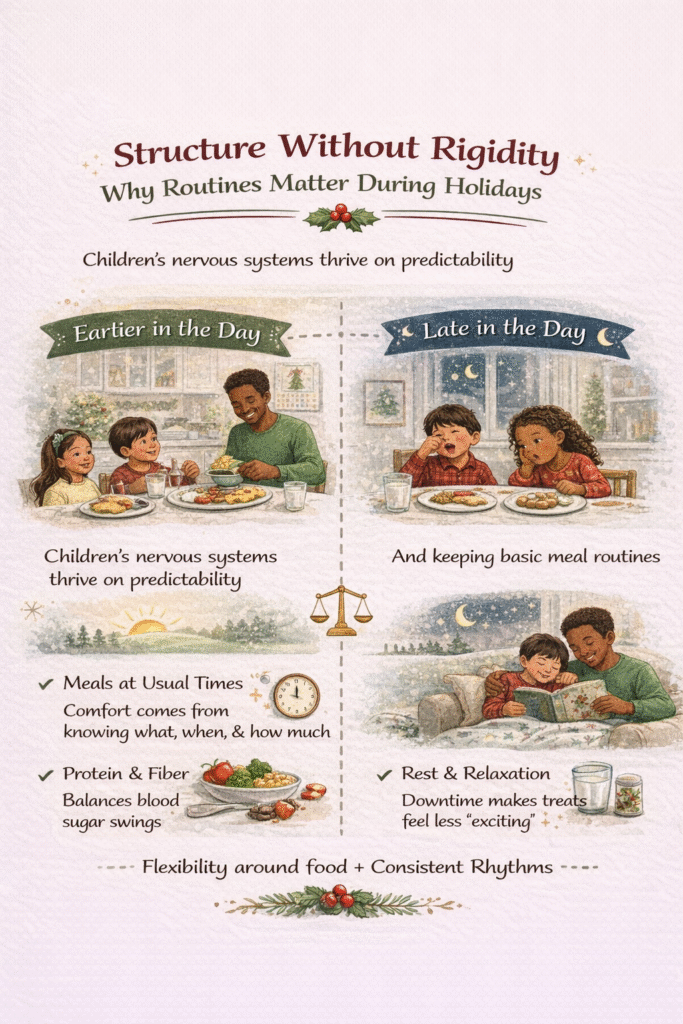
Children’s nervous systems thrive on predictability and keeping basic meal routines helps:
- Reduces constant grazing
- Prevents sugar intake driven by hunger
- Supports emotional regulation
During Christmas:
- Keep breakfast, lunch, and dinner relatively stable
- Allow treats during celebrations without stress
- Avoid making sugary foods a “special event” every hour
🎄 Flexibility is essential but structure creates safety, especially during exciting periods.
🕰️ Timing Matters: When Sugar Is Eaten Changes How the Body Responds
The body doesn’t process sugar the same way throughout the day.
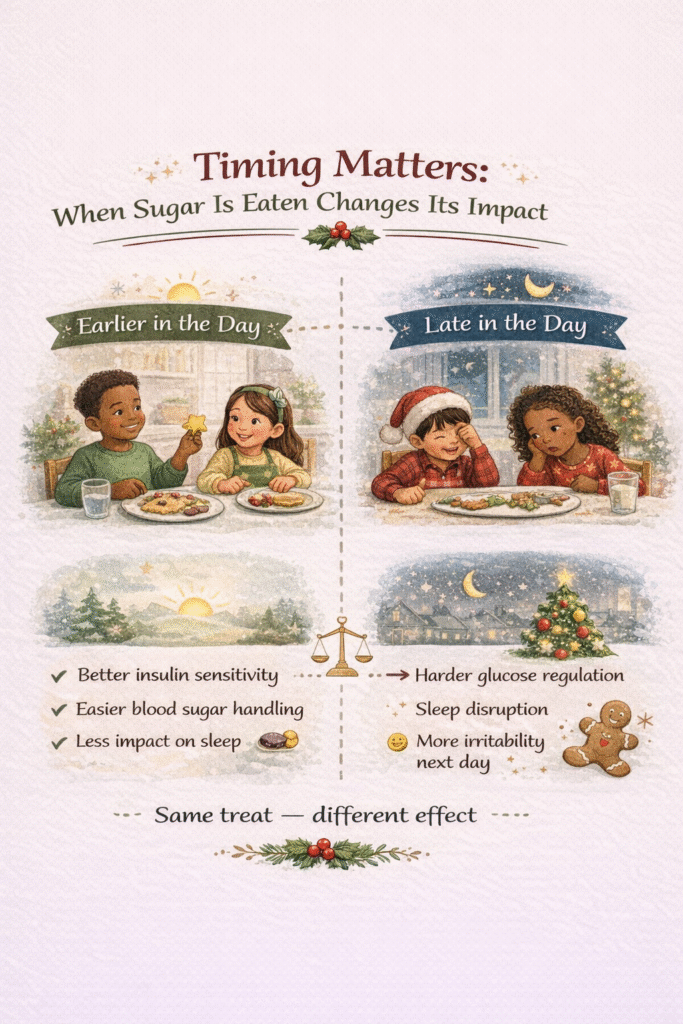
From a physiological perspective, insulin sensitivity is generally higher earlier in the day and gradually decreases toward the evening. This means the same sugary food is easier to manage in the morning or midday than late at night.
During the holidays, treats often shift to late afternoons and evenings, sometimes close to bedtime. When sugar is consumed late in the day, it is more likely to interfere with sleep and emotional regulation.
Poor sleep then affects the next day’s behavior: tired children have a harder time managing stimulation, emotions, and cravings creating a cycle that parents often attribute to “too much sugar,” when timing plays a major role.
💡 What helps in practice:
- If possible, offer sweeter treats earlier in the day
- Pair evening treats with meals rather than on an empty stomach
- Avoid large amounts of sugar right before bedtime when you can
- Focus evenings on calming rituals: warm meals, baths, stories, connection
This isn’t about perfection, it’s about working with the body’s natural rhythms, not against them.
💪 Move to Balance the Treats
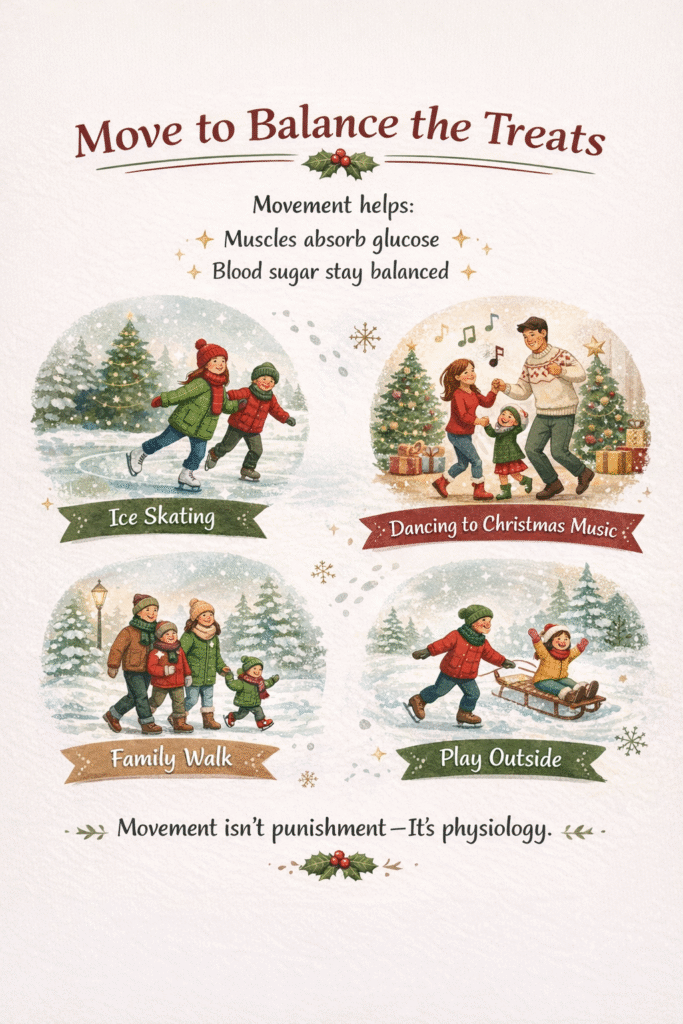
Movement is one of the most overlooked tools during the holidays.
From a metabolic perspective:
- Muscles help absorb glucose from the blood
- Light movement improves blood sugar regulation
- Activity supports mood and emotional regulation
Christmas-friendly movement ideas:
- Family walks after meals
- Dancing to holiday music
- Outdoor play
- Helping with decorations or cooking
👉 Movement isn’t punishment — it’s physiology working in our favor.
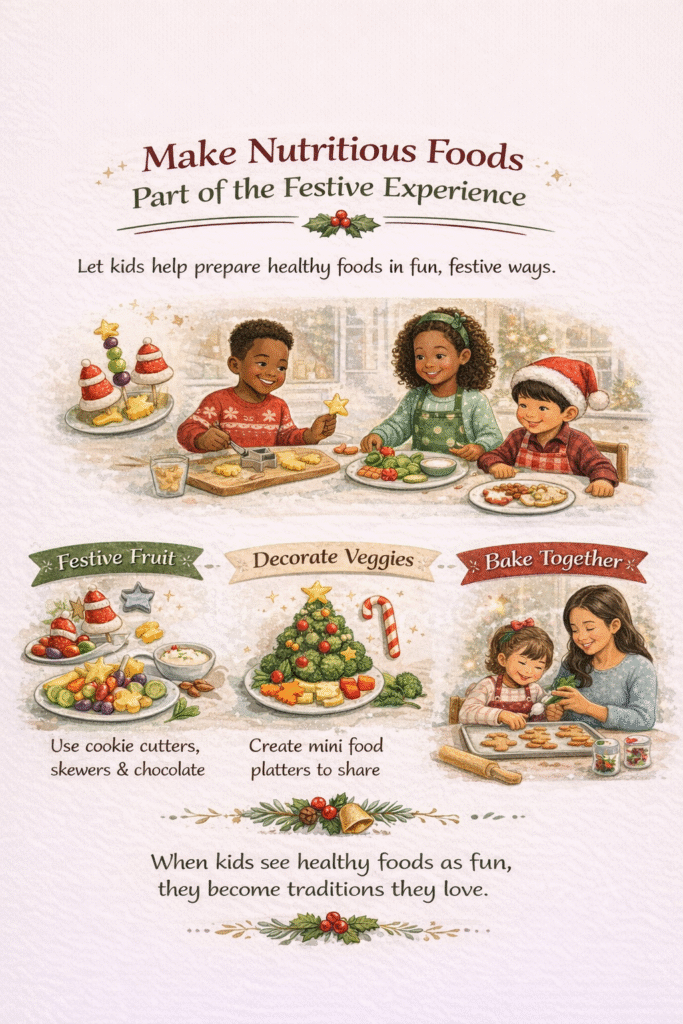
🎨 Make Nutritious Foods Part of the Festive Experience
Healthy foods don’t need to compete with sweets, they can join the celebration.
Festive ideas:
- Strawberry and banana “Santa hats”
- Kiwi and grape “Christmas trees”
- Cream cheese or mini mozzarella balls and all sort of veggies “Snowman veggie tray”
- Yogurt parfaits with red and green toppings
- Homemade hot chocolate with warm milk and cocoa, lightly sweetened
Visual appeal and fun reduce resistance — especially during high-stimulation periods like Christmas.
❤️ Children Learn Balance by Watching, Not by Rules
Children learn their relationship with food primarily through observation.
When adults:
- Enjoy holiday foods calmly
- Avoid guilt or compensation talk
- Model balance instead of restriction
Children learn that:
- Treats are normal
- Food is enjoyable
- Bodies don’t need punishment for celebrating
This modeling is more powerful than any rule.
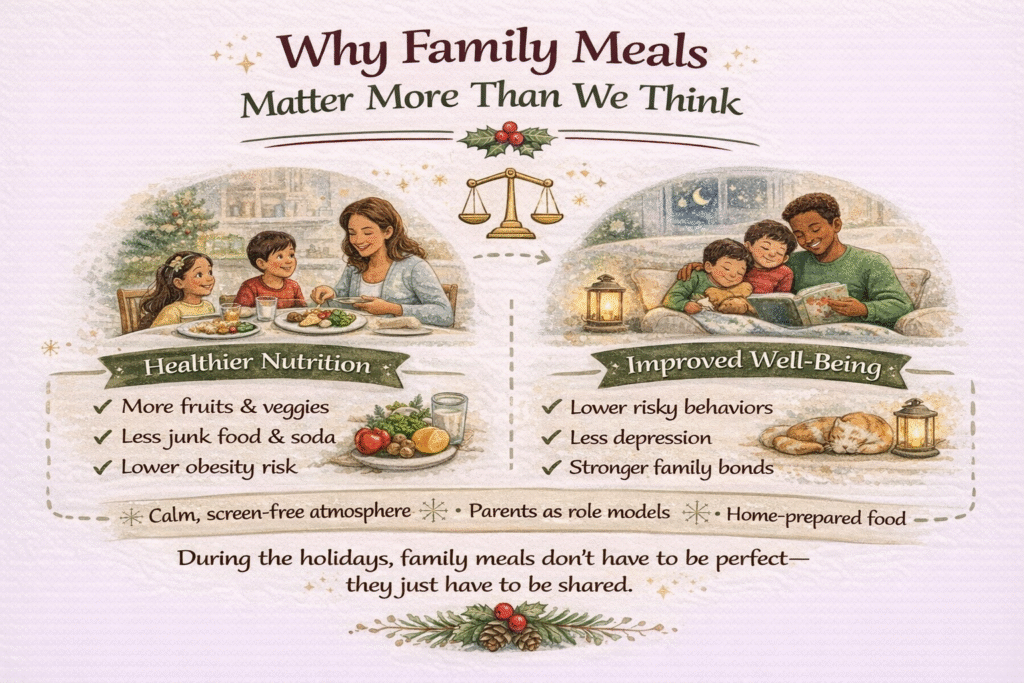
♥️ Why Family Meals Matter More Than We Think
Beyond individual food choices, research consistently shows that regular family meals are one of the most powerful tools for supporting children’s nutrition, behavior, and emotional well-being.
Children who eat more meals with their families tend to:
- Consume more fruits, vegetables, and nutrient-dense foods
- Drink fewer sugary beverages and eat less ultra-processed food
- Have a lower risk of overweight and obesity
- Be more open to trying new foods
But the benefits go far beyond nutrition. Frequent family meals are also associated with:
- Lower rates of substance use and risky behaviors in adolescents
- Better emotional health, including lower rates of depression
- Stronger family bonds, communication, and sense of security
What makes family meals so protective isn’t perfection, it’s the environment:
- A calm, screen-free atmosphere
- Parents modeling balanced eating
- Shared conversation and connection
- Home-prepared meals most of the time
In these moments, children don’t just learn what to eat, they learn how to relate to food, to their bodies, and to others. Family meals create a natural space where balance, routine, and trust come together especially during emotionally rich times like the holidays.
During the holidays, family meals don’t have to be perfect, they just have to be shared.
🌟 Trust the Body’s Ability to Self-Regulate
Children are naturally equipped to regulate their intake when not restricted or pressured.
This means:
- Some days they’ll eat more sweets
- Some days they’ll barely touch them
- Balance emerges over time
Long-term research consistently shows that trust builds healthier eating behaviors than control.
🎁 Final Thought: The Healthiest Christmas Tradition Is Calm
Christmas sugar doesn’t need to be stressful. When parents understand the biology, behavior, and emotional context, food becomes a tool for learning — not fear.
This holiday season, focus on:
- Nourishment over restriction
- Understanding over control
- Connection over perfection
Because the most powerful gift we can give children is not sugar rules — it’s the ability to enjoy food with balance, confidence, and trust 🎄💙
And after the holidays, there’s no need for detoxes, restriction, or “making up for it.”
The body is resilient — simply returning to familiar routines, balanced meals, and movement is enough.
What matters most isn’t what happens in one festive week, but what children learn about food, balance, and trust over time.
💡 A gentle reminder
This article is intended for educational purposes and does not replace personalized medical or nutritional advice. Parents with specific concerns are encouraged to consult a qualified healthcare professional or registered dietitian.
📚 References & Further Reading
- Harvard T.H. Chan School of Public Health – The Nutrition Source Sugar, carbohydrates, insulin response, and metabolic health https://www.hsph.harvard.edu/nutritionsource/
- World Health Organization (WHO) Guidelines on sugar intake for children and adults https://www.who.int/publications/i/item/WHO-NMH-NHD-15.2
- American Heart Association (AHA) Added sugars and children’s health https://www.heart.org/en/healthy-living/healthy-eating/eat-smart/sugar/added-sugars
- American Academy of Pediatrics (AAP) Family meals, screen-free eating, and healthy development https://www.aap.org
- Harvard Graduate School of Education – Making Caring Common Project The role of family routines and shared meals in child development https://mcc.gse.harvard.edu
- Journal of Nutrition Education and Behavior Family meals and associations with dietary quality and emotional well-being in children https://www.jneb.org/article/S1499-4046(14)00020-9/fulltext
- JAMA Pediatrics Associations between family meals and adolescent mental health and risk behaviors https://jamanetwork.com/journals/jamapediatrics/fullarticle/1681849
- National Center on Addiction and Substance Abuse (CASA) The importance of family dinners in reducing risky behaviors among adolescents
- Mayo Clinic Family meals: Benefits for children’s health and behavior https://www.mayoclinic.org
- National Sleep Foundation Sleep, blood sugar regulation, and children’s behavior https://www.thensf.org
- JAMA Pediatrics Associations between family meals and adolescent mental health and risk behaviors https://jamanetwork.com/journals/jamapediatrics/fullarticle/1681849
- Centers for Disease Control and Prevention (CDC) Physical activity and blood sugar regulation in children https://www.cdc.gov
- World Health Organization (WHO) Physical activity guidelines for children https://www.who.int/teams/health-promotion/physical-activity