Updated April 03, 2026 By Lamia Ghernati & Rim El Helou
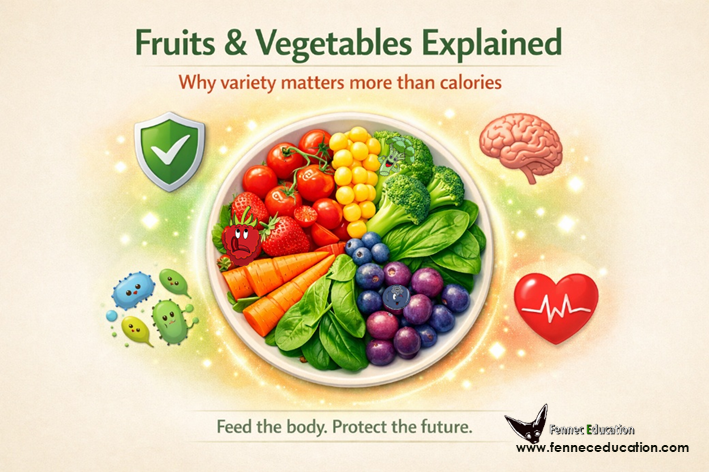
When we talk about food, we often focus on calories, carbohydrates, fats, or protein. But fruits and vegetables don’t fit neatly into that conversation.
They are not primarily there as major sources of energy. They are there to protect, regulate, and support the body, every single day. And this is especially important for children, whose bodies are still developing and adapting to the world around them.
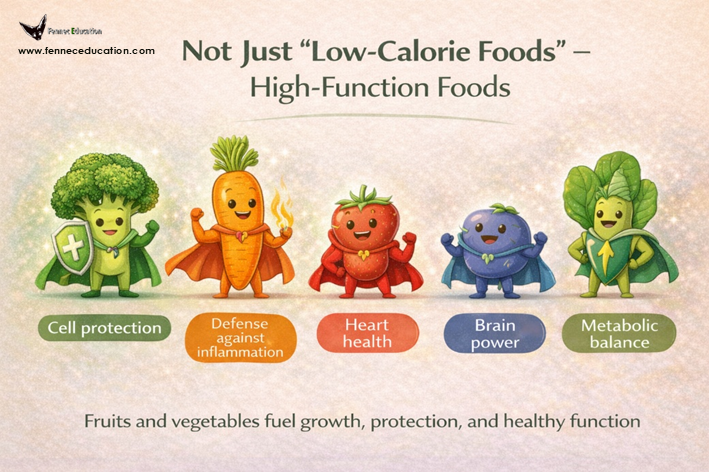
🥦 Not Just “Low-Calorie Foods”: High-Function Foods
Fruits and vegetables are often described as “light” or “low in calories.”
But this can be misleading. They are actually some of the most biologically active foods we eat.
They provide:
- Vitamins and minerals that support growth and body functions
- Fiber that helps digestion and gut health
- Phytochemicals — powerful natural compounds that protect our cells
👉 In other words:
They don’t just fill the plate — they support how the body works at a deeper level.
🌈 Phytochemicals: The Body’s Internal Pharmacy
This is where fruits and vegetables become truly unique. They contain phytochemicals; natural compounds produced by plants to protect themselves. And when we eat them, they help protect us too. They can be thought of as part of the body’s internal “support system,” helping maintain and protect normal function.
🔬 What do they do?
Phytochemicals have been shown to:
- Act as antioxidants, helping protect cells from damage
- Support the body’s anti-inflammatory processes
- Be associated with a lower risk of certain chronic diseases, including some cancers
🌈 Why variety matters
Different plants contain different phytochemicals, and each group supports the body in a slightly different way.
- 🔴 Red foods (tomatoes, strawberries, watermelon) → lycopene and related compounds → support heart health and are associated with reduced risk of certain diseases
- 🟠🟡 Orange & yellow foods (carrots, sweet potatoes, peppers) → carotenoids → support eye health, skin, and immune function
- 🟢 Green vegetables (broccoli, spinach, zucchini) → chlorophyll, folate, and various phytochemicals → support detoxification processes, cell function, and overall metabolic health
- 🔵🟣 Blue/purple foods (berries, grapes, eggplant) → polyphenols and anthocyanins → support brain health, memory, and help regulate inflammation
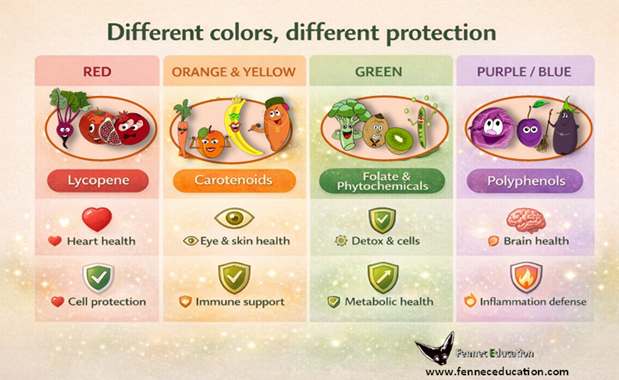
👉 Each color contributes to a different layer of protection in the body. This is why no single “superfood” is enough, health is built through diversity and repetition over time.
🥦 Fresh, Frozen, or Canned: Does It Matter?
When thinking about fruits and vegetables, many people assume that fresh is always best. But the reality is more nuanced.
All forms; fresh, frozen, and canned can contribute to a healthy diet. What matters most is regular intake and variety over time.
🥕 Fresh vs Frozen vs Canned: Quick Comparison
| Feature | Fresh 🥕 | Frozen ❄️ | Canned 🥫 |
| Nutrient Content | High, but can decrease over time during storage | Well preserved (frozen at peak ripeness) | Generally good, but some loss during processing |
| Convenience | Requires washing, peeling, cutting | Ready to use, minimal prep | Very convenient, ready to eat or heat |
| Shelf Life | Short (days to weeks) | Long (months) | Very long (months to years) |
| Taste & Texture | Often best when very fresh | Good, but texture may soften after cooking | Softer texture |
| Additives | None | Usually none | May contain added salt, sugar, or conservatives |
| Cost | Can be higher (especially out of season) | Often affordable | Usually affordable |
| Food Waste | Higher risk (spoils quickly) | Low (use what you need) | Very low |
⚖️ A Practical Perspective
Instead of focusing on one “perfect” option, it’s more helpful to think in terms of flexibility.
👉 A balanced approach:
- Use fresh when available and convenient
- Keep frozen options for quick meals and busy days
- Use canned as a practical backup
All three forms can support health, especially when they help increase overall fruit and vegetable intake.
🦠 Fiber, Microbiota, and the Invisible Ecosystem
From Article 2, we know that fiber feeds the gut microbiota. Fruits and vegetables are one of the main sources of fiber in children’s diets. And this has effects far beyond digestion. A well-fed microbiota supports:
- Immune function
- Inflammation regulation
- Even aspects of mental health
👉 So when a child eats fruits and vegetables, they are not just feeding themselves, they are also feeding the billions of bacteria that support their health.
🍎 Is Fruit “Too Much Sugar”? Let’s Clarify
This is one of the most common concerns. But whole fruit is very different from added sugar.
🍏 Whole fruit:
- Contains fiber, which slows sugar absorption
- Provides water, increasing satiety
- Delivers phytochemicals and nutrients
- Contains naturally occurring sugars within a complex structure that affects how the body responds metabolically
🧃 Fruit juice or sweets:
- Little to no fiber
- Faster sugar absorption
- Fewer protective compounds
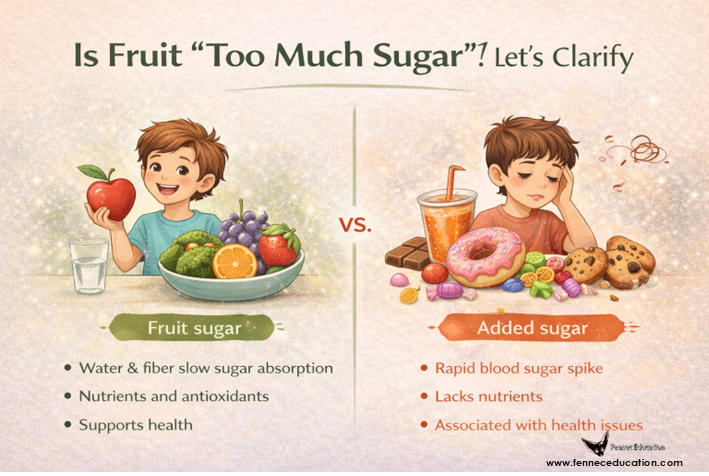
👉 The result: Whole fruit behaves very differently in the body.
Fruit is not just sugar, it is a complex, protective food matrix, very different from industrial sugary foods.
🍬 When “Sweet” Replaces Variety: A Hidden Shift
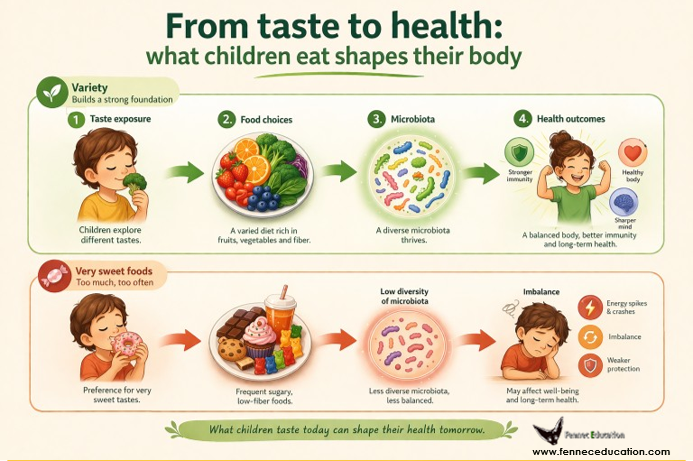
Children are naturally drawn to sweet tastes, this is part of human biology. But today, many modern processed foods are formulated to be significantly sweeter than natural foods. Over time, this can influence how children experience taste.
👉 Very sweet foods can:
- Make naturally sweet foods like fruit feel “less interesting”
- Reduce acceptance of more subtle flavors (like vegetables)
🧠 What happens in the body?
Frequent consumption of highly processed sugary foods is associated with:
- Rapid spikes in blood sugar, followed by drops in energy
- Changes in the gut microbiota, especially when fiber intake is low
- May contribute to increased inflammation over time, especially within an overall low-fiber, highly processed diet
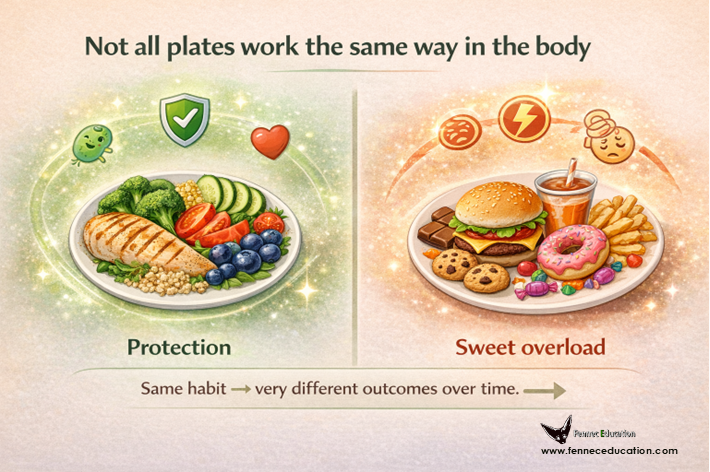
The gut microbiota plays a role in: Immune function, Digestion, and how the body responds to food
👉 When this balance is disrupted, it may contribute to:
- Digestive discomfort
- Increased susceptibility to illness
- And, over time, a higher risk of chronic health issues
Early and repeated exposure to very sweet, highly processed foods can shape children’s taste preferences and influence their internal environment, including the gut microbiota, in ways that may affect health over time.
🌿 Developing Taste: Beyond Sweetness
Beyond sweetness, the world of food offers a wide range of flavors. Many fruits, vegetables, and herbs have slightly bitter, sour, or pungent flavors such as:
- Grapefruit
- Rocket (arugula)
- Herbs
- Garlic or onions
These flavors are not a flaw, they are part of how plants are built.
In nature, these stronger tastes are often linked to the presence of bioactive compounds (phytochemicals) that help protect the plant, and can also support our health.
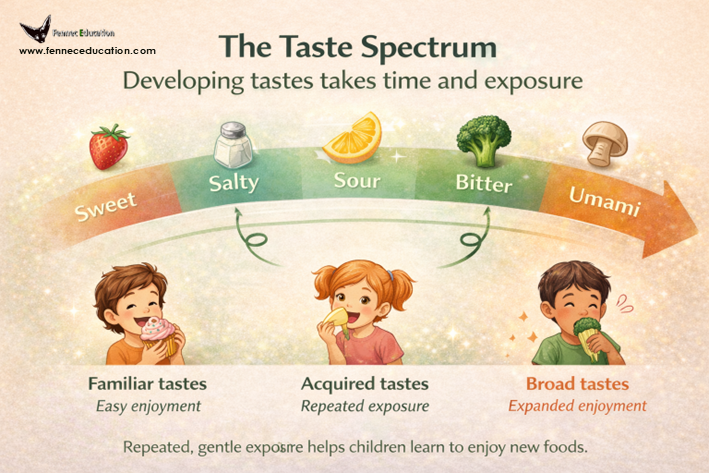
👉 In other words: some of the flavors children may initially reject are often the ones that bring unique protective benefits.
🧠 Why early exposure matters
Children are not born liking all flavors, they learn them through repeated exposure. Research shows that repeated, low-pressure exposure is one of the most effective ways to build acceptance.
When children are only exposed to very sweet foods, it can become harder for them to accept:
- Slightly bitter vegetables
- Sour fruits
- More complex flavors
But when these foods are introduced regularly and without pressure, children can gradually:
- Become familiar with them
- Accept them
- And even enjoy them over time
⚖️ A Balanced Perspective for Parents
This doesn’t mean children should never have sweet treats. But it helps to delay and limit frequent exposure to highly processed sugary foods, especially in early childhood.
Why? Because early food experiences help shape:
- Taste preferences
- Eating habits
- And even microbiota development
🍓 What does this look like in everyday life?
👉 Make fruit the “default sweet”
- Offer fresh fruit as snacks instead of biscuits or packaged sweets
- Include fruit in breakfast, yogurt, or afternoon snacks
- Keep fruit visible and easily accessible
👉 Try not to rely on highly processed sweets as the everyday default snack
- Not a daily habit, but something enjoyed from time to time
- Avoid making them the “go-to” snack
👉 Use natural sweetness in homemade foods
Prepare cakes, muffins, or snacks using whole or dried fruits (like bananas, dates, or dried apricots). This keeps:
- Some fiber
- More nutrients
- And a less intense sweetness compared to refined sugar
👉 Focus on exposure, not restriction
The goal is not to forbid, but to build preference for natural flavors first.
Over time, these small choices help children develop a taste for foods that nourish and protect their bodies, rather than relying on overly sweet, highly processed options.
🌍 Variety Over Perfection
Instead of focusing on “how much” or “how perfect,” it is more helpful to think in terms of variety over time. The recommendations are around 5 servings of fruits and vegetables per day.
🌈 Different colors = different benefits
For children, this means:
- Exposure to many types of fruits and vegetables
- Not relying on just one or two “accepted” foods
- Building familiarity gradually
👉 Health is not built from one perfect meal, but from repeated exposure and diversity over time.
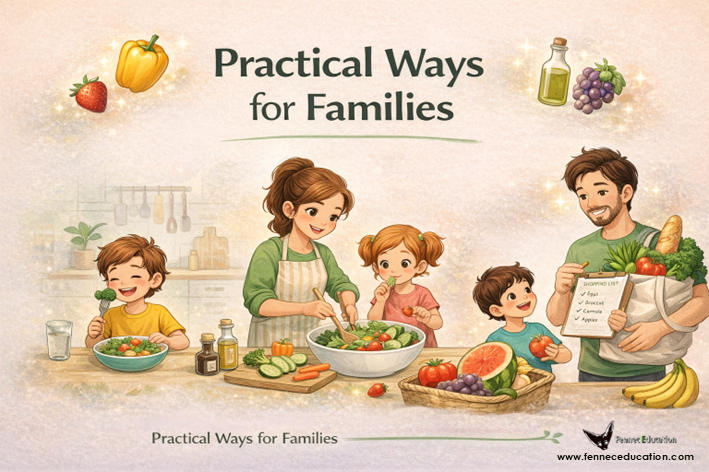
🍽️ Practical Ways for Families
Helping children eat fruits and vegetables is not about pressure, it’s about exposure and environment. Some simple approaches:
- Add, don’t force → include fruits or vegetables alongside familiar foods
- Repeat exposure → children often need multiple exposures before accepting a food
- Mix forms → raw, cooked, blended, chopped
- Make them visible and accessible → on the table, in lunchboxes, as snacks
💡 For example:
- Offering a variety across the week, not just one meal
- Adding fruit to breakfast
- Including vegetables in school lunchboxes
✨ Final Thought
Fruits and vegetables are often seen as side dishes. But in reality, they are among of the most powerful tools we have to support health. They help:
- Protect cells
- Support the gut
- Regulate the body
- And build long-term resilience
And this begins early; in childhood. Because building healthy habits is not about perfection, but about creating a diverse and supportive food environment over time.
📚 References & Further Reading
- Harvard T.H. Chan School of Public Health – Vegetables and Fruits
https://www.hsph.harvard.edu/nutritionsource/what-should-you-eat/vegetables-and-fruits/ - World Health Organization (WHO) – Healthy Diet
https://www.who.int/news-room/fact-sheets/detail/healthy-diet - National Institutes of Health – Phytochemicals
https://www.ncbi.nlm.nih.gov/pmc/articles/PMC6770853/ - FAO – Food-based dietary guidelines
https://www.fao.org/nutrition/education/food-dietary-guidelines/en/ - Gut microbiota & diet (review) https://www.ncbi.nlm.nih.gov/pmc/articles/PMC6521001/
- Polyphenols & health https://www.ncbi.nlm.nih.gov/pmc/articles/PMC2835915/