
Updated Novembre 02, 2026 By Lamia Ghernati & Rim El Helou
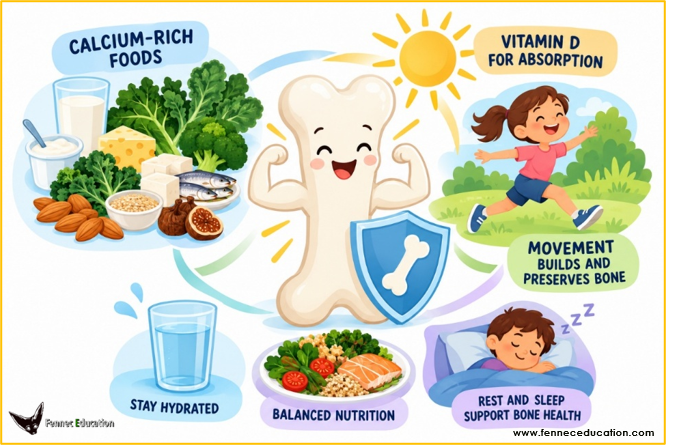
When we think about calcium, milk is often the first food that comes to mind. For generations, parents have encouraged children to drink milk to build strong bones and teeth. But calcium is only one part of a much bigger story.
Our bones are living tissues that constantly grow, repair, and adapt to the demands we place on them. The foods we eat, the nutrients we absorb, and even the way we move all influence how our skeleton develops and maintains its strength.
This is particularly important during childhood and adolescence, when the body is building much of the bone mass it will rely on throughout life.
But what happens when someone doesn’t consume dairy? Are all calcium-rich foods equally beneficial? Can exercise really make bones stronger? And does taking more calcium necessarily mean better bone health?
Understanding the science behind calcium helps us answer these questions and make informed choices for the whole family.
🥛 Calcium: More Than a Bone-Building Mineral
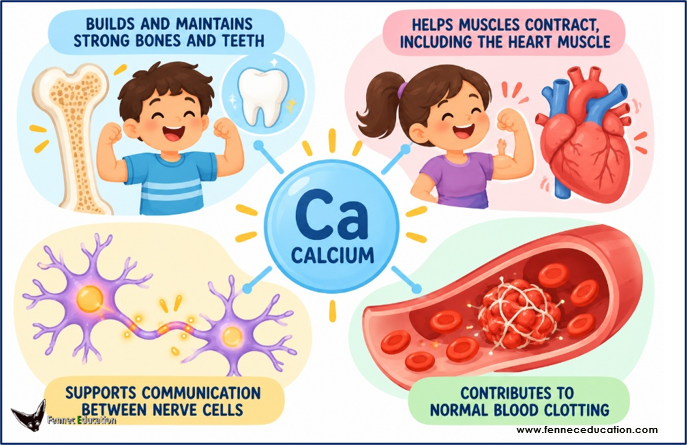
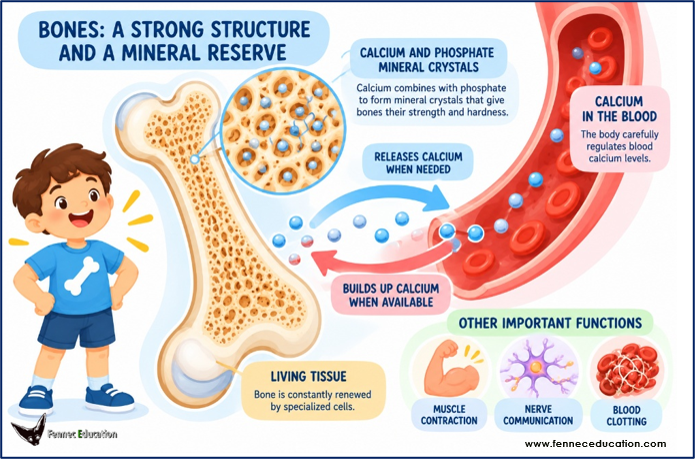
Calcium is the most abundant mineral in the human body, and approximately 99% of it is stored in our bones and teeth. Within bones, calcium combines with phosphate to form mineral crystals that give the skeleton much of its hardness and strength.
However, the remaining calcium plays essential roles throughout the body. It helps muscles contract, including the heart muscle; supports communication between nerve cells; contributes to normal blood clotting; and participates in numerous cellular processes.
Because these functions are vital, the body carefully regulates calcium levels in the blood. When dietary calcium is insufficient over time, the body can draw on calcium stored in bones to help maintain normal blood calcium levels. This is one reason why consistently meeting calcium requirements is so important.
Science Bit 🧪
Think of bones as both a supporting structure and a mineral reserve. They provide strength and protection while storing calcium that the body can use when needed. But unlike a simple storage container, bones are alive and constantly changing!
🦴 How Bones Grow, Repair, and Become Stronger
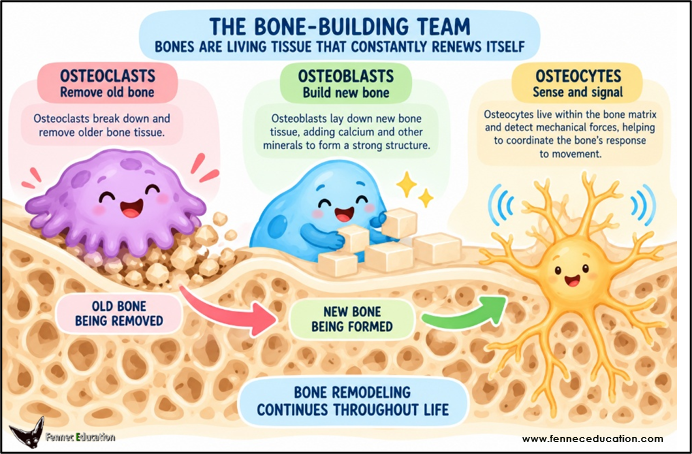
Bones may appear solid and unchanging, but they are remarkably active tissues. Throughout life, specialized cells continuously remove older bone and replace it with new bone. Two important types of cells coordinate this process:
- Osteoblasts are responsible for forming new bone.
- Osteoclasts break down and remove old bone.
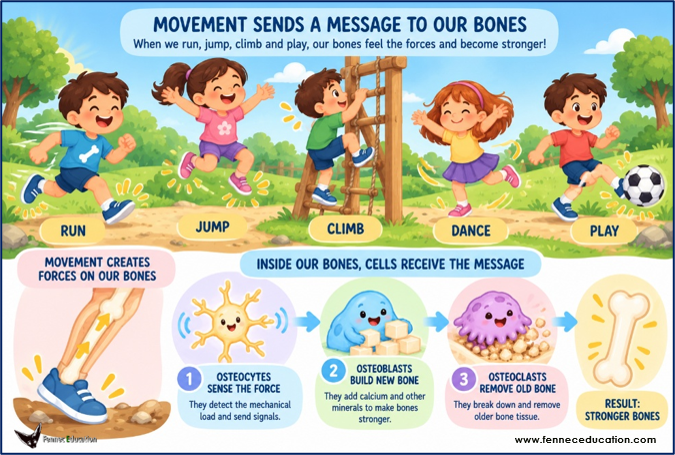
A third group, called osteocytes, lives within bone tissue and helps detect mechanical forces, coordinating the bone’s response to movement.
During childhood and adolescence, bone formation generally exceeds bone breakdown. As children grow, their skeleton becomes larger, denser, and stronger. But calcium alone does not determine how successfully this happens.
🤸🏻♂️Movement Sends a Message to Our Bones
Every time a child runs, jumps, skips, climbs, or plays an active game, forces travel through the skeleton.
Bone cells detect these mechanical loads and activate biological signals that help bones adapt to the demands placed on them. This process is known as mechanotransduction. In simple terms, movement tells bones that they need to be strong enough to support the activities we perform.
Activities involving weight-bearing and impact, such as jumping, hopping, running, and dancing, are particularly valuable during the growing years.
Swimming and cycling offer important cardiovascular and muscular benefits, but they generally provide less direct bone-loading stimulus than activities involving impact against the ground.
This doesn’t mean every child needs a structured exercise program. Quite the opposite: regular active play provides many opportunities for the skeleton to experience beneficial mechanical loading.
👉 In other words: bones respond to movement! It helps children build bone and helps adults preserve it.
📈 Building Our Bone Capital: An Investment for Life
One of the most important concepts in bone health is peak bone mass.
During childhood and adolescence, the skeleton accumulates bone tissue and minerals. This process continues into early adulthood, when most people reach their maximum bone mass, generally during their twenties. We can think of this as building a lifelong bone reserve.
Imagine two people whose bone mass increases throughout childhood and adolescence, reaches a peak in early adulthood, and then gradually declines as they age.
The person who reaches a higher peak may have a greater reserve before their bones become fragile. This is why supporting healthy bone development early in life is so valuable.
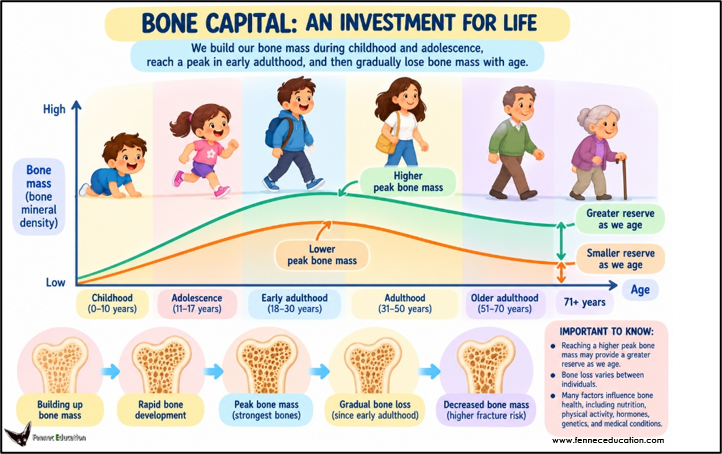
However, reaching a high peak bone mass does not guarantee protection against osteoporosis. Genetics, hormonal changes, nutrition, medications, medical conditions, and physical activity all influence how much bone is subsequently lost.
👵🏻🧓🏼 What Happens to Bone Density as We Age?
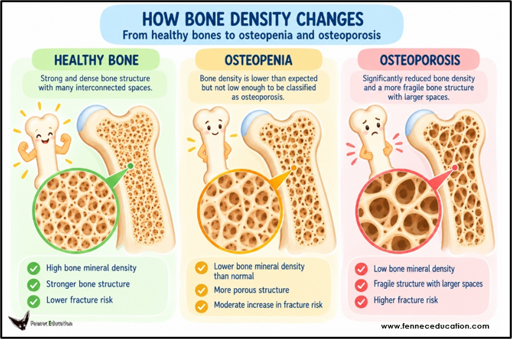
As we grow older, the balance between bone formation and bone breakdown may gradually shift. When bone loss becomes significant, bone mineral density can decrease. Two terms are commonly used when discussing this process:
Osteopenia describes bone mineral density that is below the expected range for healthy young adults but has not reached the density threshold used to define osteoporosis.
Osteoporosis is a condition characterized by reduced bone strength and an increased risk of fractures.
Although osteoporosis is more common in older adults, particularly women after menopause, it can also affect men. The risk depends on several factors, including genetics, hormonal changes, medical conditions, medications, nutrition, and physical activity.
This is why building strong bones early in life and maintaining healthy habits throughout adulthood can help reduce the risk of osteoporosis and fractures.
🏋🏻♂️ Can Exercise Improve Bone Density Later in Life?
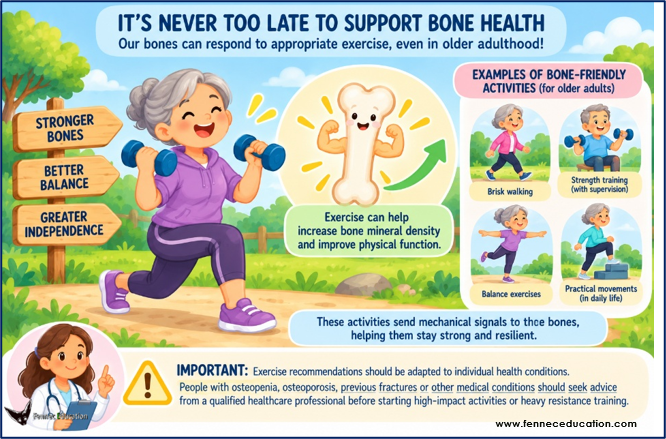
Encouragingly, research shows that bones can continue responding to mechanical loading even in older adulthood. In the LIFTMOR randomized controlled trial, postmenopausal women with low bone mass participated in a carefully supervised program combining high-intensity resistance and impact training.
After eight months, the exercise group demonstrated improvements in lumbar spine bone mineral density and physical function compared with a low-intensity exercise group.
These findings are important because they challenge the assumption that exercise can no longer influence bone health after menopause. They also show why physical activity deserves attention alongside nutrition and medical treatment.
However, improvements vary between individuals, and these results do not mean that osteoporosis can always be reversed.
Important: Exercise recommendations must be adapted to individual health conditions. People diagnosed with osteopenia or osteoporosis, particularly those with previous fractures, significant bone fragility, or other medical conditions, should seek advice from a qualified healthcare professional before beginning high-impact activities or heavy resistance training.
Some movements may need to be modified or avoided, and a supervised exercise program may be more appropriate.
👉 The goal is not to assume that the same exercise protocol is suitable for everyone, but to understand that bones remain biologically responsive to appropriate movement throughout life.
📊 4. Calcium Absorption: It’s Not Just About How Much We Eat
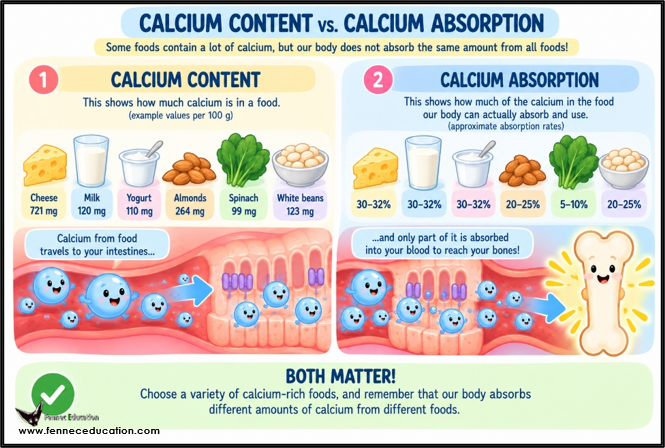
A food may contain a substantial amount of calcium, but that does not necessarily mean the body can absorb all of it. This brings us to an important nutritional concept: bioavailability.
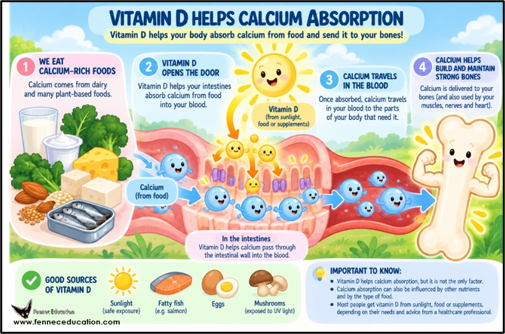
Bioavailability refers to the proportion of a nutrient that becomes available for the body to absorb and use. After we consume calcium-containing foods, calcium is released during digestion and absorbed primarily through the small intestine.
The amount absorbed depends on several factors, including the calcium source, the presence of other dietary compounds, vitamin D status, age, and the body’s calcium requirements.
☀️ Why Vitamin D Matters
Vitamin D plays a central role in helping the intestine absorb calcium. When vitamin D status is inadequate, calcium absorption can become less efficient, making it harder to maintain healthy bones. This is why calcium and vitamin D are often discussed together.
However, vitamin D is not the only nutrient involved in bone health. Adequate protein, phosphorus, magnesium, and overall nutritional balance also contribute to normal skeletal development.
Sunlight can support vitamin D production in the skin, but production varies with season, latitude, skin exposure, and other factors. Food sources, fortified products, and supplements when indicated may therefore be important.
🌱 Why Some Plant Foods Provide Less Absorbable Calcium
Certain plant compounds can bind calcium in the digestive tract and reduce its absorption. Two important examples are:
- Oxalates, found in particularly high concentrations in foods such as spinach and rhubarb.
- Phytates, present in varying amounts in legumes, whole grains, nuts, and seeds.
For example, spinach contains calcium, but its high oxalate content makes much of that calcium difficult to absorb. In contrast, calcium from low-oxalate vegetables such as kale, broccoli, and bok choy can be absorbed relatively efficiently.
This does not mean spinach, legumes, or whole grains should be avoided. They provide many other valuable nutrients and beneficial plant compounds. It simply means that a varied diet should include calcium sources with good bio-availability.
Food preparation methods such as soaking, fermenting, and certain cooking techniques can reduce some compounds that interfere with mineral absorption, although their effects vary by food.
⚖️ Dairy vs. Plant-Based Calcium: Understanding the Differences
🥛 What Are Dairy Products?
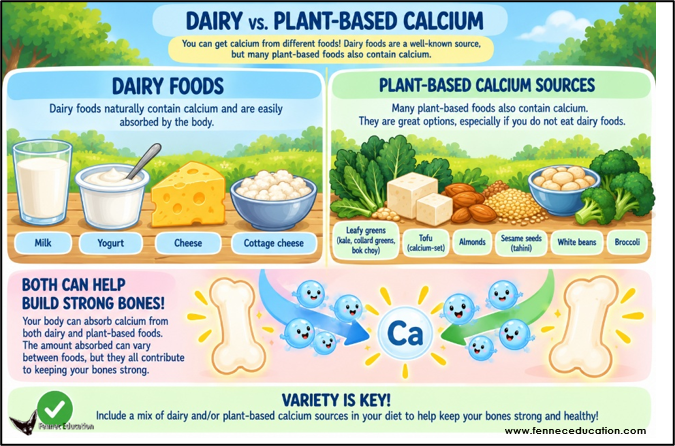
Dairy products are foods made from the milk of mammals, most commonly cows, goats, and sheep. They include milk, butter, yogurt, cheese, and other milk-derived products.
🥚 But what about eggs? Despite sometimes being displayed near milk and cheese in supermarkets, eggs are not dairy products. They come from birds, not milk-producing mammals.
This distinction matters because eggs provide valuable nutrients, including protein and choline, but they are not significant sources of calcium.
Comparing Calcium Sources
Dairy products are familiar calcium sources because they generally provide substantial amounts of calcium in convenient portions. But not all dairy products contain the same amount of calcium, either. Milk, yogurt, and many cheeses are good sources, while butter and cream provide relatively little calcium compared with their energy content.
Milk and yogurt also supply protein, phosphorus, and other nutrients that contribute to overall nutrition. But dairy is not the only way to meet calcium requirements.
Many families choose dairy-free diets because of milk allergy, lactose intolerance, personal preference, or cultural dietary practices. The key is understanding which alternatives provide meaningful amounts of absorbable calcium.
| Food | Calcium considerations |
| Milk and yogurt | Rich sources of calcium with generally good absorption |
| Cheese | Can provide substantial calcium, although amounts vary by type |
| Kale and bok choy | Calcium is relatively well absorbed, but amounts per serving vary |
| Broccoli | Calcium is well absorbed, although a typical serving provides relatively little |
| Spinach | Contains calcium, but oxalates substantially limit its absorption |
| Calcium-set tofu | Can be an excellent source, depending on the calcium coagulant and product |
| Fortified plant drinks | Can provide substantial calcium when appropriately fortified |
| Sardines or canned salmon with edible bones | Provide calcium from the soft, edible bones |
| Sesame seeds, tahini, almonds, and legumes | Contribute calcium, but serving size and absorption vary |
A useful example is the comparison between milk and spinach. In one human absorption study, approximately 28% of calcium from milk was absorbed, compared with around 5% from spinach.
However, the percentage absorbed is not the same as the total amount absorbed from a serving.
A food may have a high absorption percentage but provide relatively little calcium in a typical portion. Broccoli, for example, contains efficiently absorbed calcium, but a standard serving contributes less calcium overall than a glass of milk.
👉 This is why both calcium content and bioavailability matter.
✅ Meeting Calcium Needs Without Dairy
Families who avoid dairy can still obtain sufficient calcium through a varied diet. The key is choosing foods that provide meaningful amounts of calcium and considering how well the body can absorb it.
Some useful options include:
- Calcium-set tofu: A versatile calcium source for stir-fries, soups, and family meals. Check the label, as calcium content varies considerably.
- Calcium-fortified plant drinks and yogurt alternatives: Convenient options when appropriately fortified. Look for around 120 mg of calcium per 100 ml of drink, and check protein and vitamin D content.
- Low-oxalate green vegetables: Kale, broccoli, and bok choy provide calcium that is relatively well absorbed.
- Sardines and canned salmon with edible bones: Rich calcium sources for families who eat fish.
- Almonds, tahini, and chia seeds: Useful additions to meals and snacks, contributing calcium alongside other nutrients, although absorption varies.
- Dried figs: A naturally sweet snack that contributes some calcium and fiber. Prunes also offer nutritional benefits, although they are not particularly rich in calcium.
- Calcium-rich mineral water: Another possible contributor, depending on the mineral composition indicated on the label.
An important distinction: Calcium-set tofu, appropriately fortified products, and fish with edible bones can provide substantial amounts of calcium in practical servings. Vegetables, nuts, seeds, and dried fruits can also contribute, but their calcium content, serving sizes, and absorption vary. They should complement rather than automatically replace more substantial calcium sources.
👉 For example, a breakfast with calcium-fortified plant drink, a lunch containing calcium-set tofu and vegetables, and a snack incorporating almonds or dried figs can all contribute to calcium intake throughout the day.
👉 Remember: No single food needs to provide all the calcium your family requires. What matters is the variety, quantity, and nutritional quality of foods consumed regularly.
For young children, offer nuts in age-appropriate forms, such as smooth nut butter or finely ground nuts, and consider serving dried fruit with meals rather than as frequent snacks to help protect dental health.
For children with milk allergies, restrictive diets, or difficulty meeting their nutritional requirements, professional dietary guidance may be helpful.
🧪 Lactose Intolerance Is Not the Same as Milk Allergy
Families sometimes avoid all dairy because of lactose intolerance, but this is not always necessary.
Lactose intolerance occurs when the body has difficulty digesting lactose, the natural sugar found in milk. Lactose-free cow’s milk can provide calcium and protein comparable to regular cow’s milk, making it a useful option for people who tolerate milk proteins.
Cow’s-milk-protein allergy, however, involves an immune reaction to proteins in milk. Lactose-free cow’s milk still contains these proteins and is therefore not a suitable substitute.
Understanding the difference can help families choose appropriate alternatives without unnecessarily restricting their diets.
🌱 Plant-Based Drinks: Are They Really Equivalent to Milk?
The growing popularity of plant-based drinks has created more choice for consumers, but also some confusion.
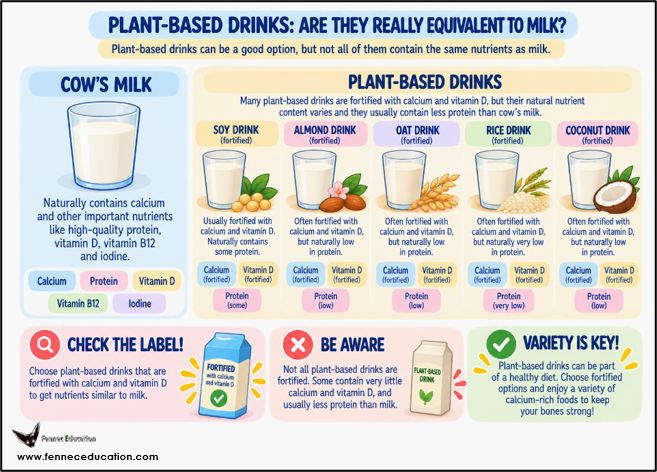
A drink made from almonds, oats, rice, coconut, or soy may look similar to milk and be used in the same way. Nutritionally, however, these products can be very different.
Some contain substantial amounts of calcium because they are fortified. Others provide very little. Protein content also varies considerably. Fortified soy drinks often provide more protein than almond, rice, or many oat drinks, making them a closer nutritional alternative to cow’s milk in that respect.
However, the suitability of any plant drink depends on a person’s age, nutritional needs, allergies, and overall diet.
What About Soy?
Soy contains naturally occurring compounds called isoflavones, which have weak estrogen-like activity under certain conditions. This has generated discussion about their effects on hormones and health.
However, ordinary soy foods and fortified soy drinks are not generally considered unsafe for healthy children or adults simply because they contain isoflavones.
It is important to distinguish ordinary soy foods from concentrated isoflavone supplements, and soy drinks from specialized soy-based infant formulas.
👉 Families managing soy allergy, complex medical conditions, or specific dietary restrictions should seek individualized advice.
A Special Note for Young Children
Ordinary plant-based drinks should not replace breast milk or appropriate infant formula during the first year of life. After 12 months, unsweetened, calcium-fortified alternatives may be suitable as part of a balanced diet, but their nutritional composition must be considered carefully, particularly for toddlers.
Rice drinks should be avoided in children under five because of concerns about inorganic arsenic, which can be present in rice-based products.
👉 Families replacing dairy regularly in a young child’s diet should seek age-appropriate nutritional guidance to ensure sufficient calcium, protein, vitamin D, and other essential nutrients.
👓 How to Read a Plant-Based Drink Label
Rather than assuming that a plant drink is healthier because it is plant-based, look at what the product actually contains.
1. Calcium: Is the drink fortified? Compare calcium content per 100 ml or per serving.
2. Vitamin D: Is vitamin D included, and in what amount?
3. Protein: Does the drink provide meaningful protein, particularly if it regularly replaces cow’s milk in a child’s diet?
4. Added sugars: Prefer unsweetened products rather than flavored drinks containing added sugars or syrups.
5. Other nutrients: Depending on the diet, vitamin B12, iodine, and other nutrients may deserve attention.
6. Ingredients: Check for added sweeteners and ingredients included mainly for flavor or texture.
A short ingredient list does not automatically make a product nutritionally complete, and a longer list does not necessarily make it unhealthy.
For children, nutritional adequacy matters more than marketing claims such as “natural,” “plant-based,” or “dairy-free.”
📈 How Much Calcium Do Children and Adults Need?
Calcium requirements change throughout life. During periods of rapid growth, particularly adolescence, the body needs more calcium to support bone mineral accumulation.
Different health authorities use different approaches to establish dietary reference values. The following table compares recommendations from the European Food Safety Authority (EFSA) and the U.S. National Institutes of Health (NIH).
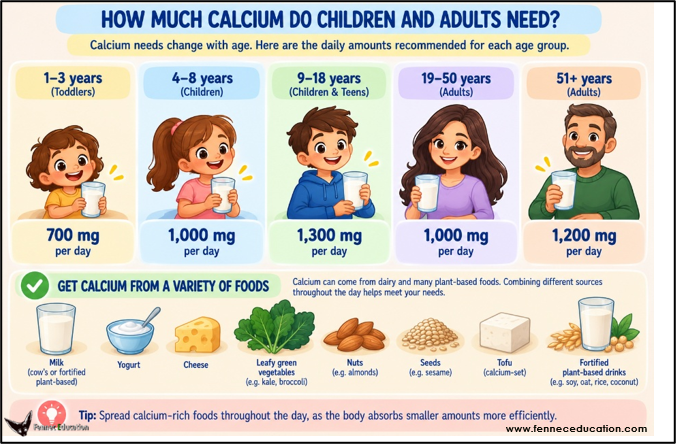
| Age group | Europe — EFSA | United States — NIH | Upper limits — NIH |
| 1–3 years | 450 mg | 700 mg | 2,500 mg |
| 4–8 years | 800 mg | 1,000 mg | |
| 9–10 years | 800 mg | 1,300 mg | 3000 mg |
| 11–17 years | 1,150 mg | 1,300 mg | |
| 18 years | 1,000 mg | 1,300 mg | |
| 19–24 years | 1,000 mg | 1,000 mg | 2,500 mg |
| 25–50 years | 950 mg | 1,000 mg | |
| 51–70 years | 950 mg | 1,000 mg for men; 1,200 mg for women | 2,000 mg |
| 71+ years | 950 mg | 1,200 mg |
Values represent daily calcium intake in milligrams (mg)/day. The age groups have been split and aligned for comparison because EFSA and NIH use different official age categories.
EFSA values are Population Reference Intakes (PRIs), while U.S. values are Recommended Dietary Allowances (RDAs). Both are intended to cover the needs of nearly all healthy individuals within their respective population groups.
These differences reflect distinct scientific assessments and methodologies, rather than one set of recommendations necessarily being more accurate than the other.
The important message is that calcium needs vary with age, and families should aim to meet them through a varied, balanced diet.
⚠️ Calcium Interactions: What Parents Should Know
💊 Calcium and Iron Supplements
Calcium may reduce iron absorption when taken at the same time, particularly in supplement form. For people prescribed both calcium and iron supplements, taking them at different times may help reduce this interaction.
However, this does not mean families need to avoid combining calcium-containing foods with iron-rich foods during normal meals. Children need both nutrients, and overall dietary quality is more important than complicated food-separation rules.
When supplements are prescribed, parents should follow the timing instructions provided by their healthcare professional or pharmacist.
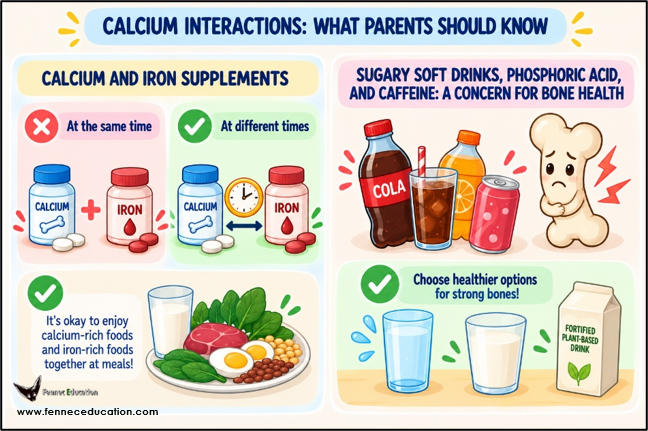
🥤Sugary Soft Drinks, Phosphoric Acid, and Caffeine: A Concern for Bone Health
Sugary soft drinks offer little nutritional value, yet their regular consumption can have important consequences for children’s health, including their developing bones.
- First, they can displace nutritious foods and drinks. When children frequently choose soft drinks instead of milk or appropriate calcium-fortified alternatives, they may miss opportunities to obtain calcium, protein, vitamin D, and other nutrients needed for healthy growth.
- Second, some soft drinks contain ingredients that raise additional concerns for bone health. Cola-type beverages commonly contain phosphoric acid and may also contain caffeine.
Researchers have investigated whether frequent cola consumption, particularly in the context of inadequate calcium intake, may negatively affect bone metabolism. Caffeine can also increase urinary calcium losses, although the size and significance of this effect depend on intake and overall nutritional status.
- Third, research has linked soft-drink consumption with poorer bone outcomes. Studies of teenage girls have reported associations between carbonated soft-drink consumption and increased fracture risk. Research in adults has also associated frequent cola consumption with lower bone mineral density.
These findings are concerning, especially during childhood and adolescence, when the skeleton is accumulating much of its future bone mass. Although the studies do not establish that one particular ingredient is responsible for fractures, they reinforce the importance of limiting these beverages.
And bone health is only one concern. Frequent consumption of sugar-sweetened drinks is also associated with dental decay, excess energy intake, weight gain, and increased cardiometabolic risk.
👉 Sugary soft drinks should not be part of children’s everyday drinking habits. Water should be the first choice for hydration, alongside nutritious foods and age-appropriate drinks that help meet nutritional needs.
As we explored in our earlier article, “Make Water the Habit: One Switch, Big Results,” replacing sugary beverages with water is a simple habit with benefits that extend far beyond hydration.
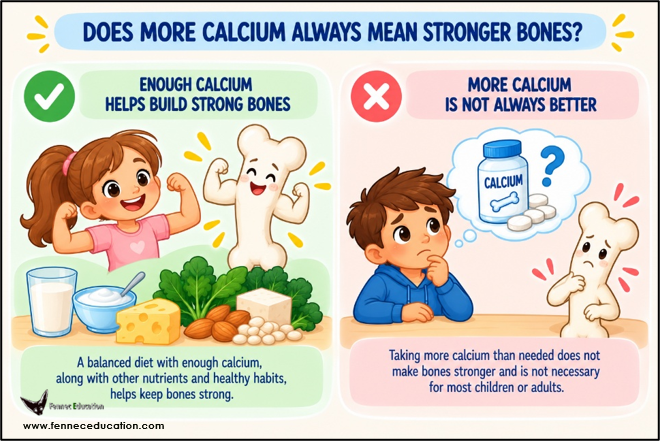
🦴 Does More Calcium Always Mean Stronger Bones?
Not necessarily.
Once calcium requirements are adequately met, consuming more calcium does not automatically produce stronger bones and excessive calcium supplementation may cause unwanted effects.
High supplemental intakes can contribute to constipation and may increase the risk of kidney stones in some circumstances. Excess calcium in the blood, known as hypercalcemia, can occur with certain medical conditions or excessive intake of calcium and vitamin D supplements.
What About Kidney Stones?
This is where an important distinction is needed. People with calcium oxalate kidney stones are not generally advised to eliminate calcium from their diet.
In fact, adequate dietary calcium consumed with meals can bind oxalate in the intestine, reducing the amount available for absorption. Very low calcium diets may therefore be counterproductive for some stone-formers.
Calcium supplements, however, require more individualized consideration, especially for people with recurrent stones, impaired kidney function, or disorders affecting calcium metabolism. People with chronic kidney disease may also have complex disturbances in calcium, phosphorus, and vitamin D regulation that require medical supervision.
Calcium and Calcification
Calcium belongs in our bones and teeth, but abnormal calcium deposits can sometimes develop in other tissues. This process, known as ectopic calcification, can occur in association with certain medical conditions, including chronic kidney disease. It should not be confused with normal bone mineralization, and it does not mean that consuming ordinary calcium-rich foods causes calcium to accumulate in arteries.
The relationship between calcium supplements and cardiovascular health remains an area of research, with findings that are not entirely consistent.
👉 For this reason, supplements should be used to address an identified need rather than taken automatically in the belief that more calcium must be better.
Remember to Count Calcium from All Sources
When considering calcium supplements, it is important to look at total daily calcium intake, including calcium from food, fortified products, and supplements.
A person who regularly consumes calcium-rich foods may need little or no additional calcium, while someone with a restricted diet or specific medical needs may benefit from professional guidance.
Taking more than the recommended amount does not necessarily provide additional bone benefits and can increase the risk of adverse effects.
👉 The goal is not to maximize calcium intake. It is to meet the body’s needs safely and consistently.
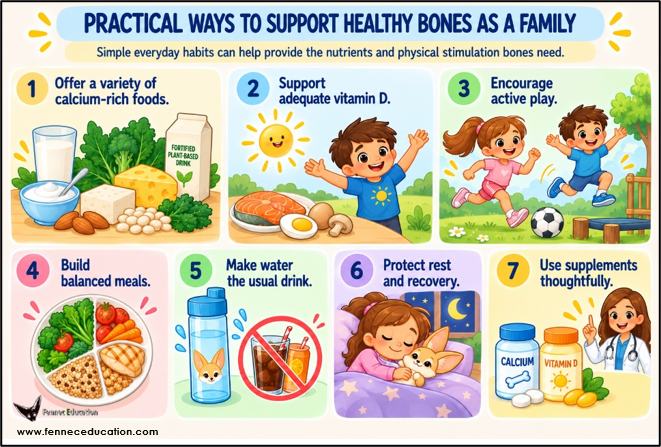
👨👩👧 Practical Ways to Support Healthy Bones as a Family
Supporting bone health does not require a complicated routine. It means creating everyday habits that provide the nutrients and physical stimulation bones need.
- Offer a variety of calcium-rich foods: Include dairy products where appropriate, or carefully chosen alternatives such as calcium-set tofu, fortified drinks, low-oxalate vegetables, and other calcium-containing foods.
- Support adequate vitamin D: Consider dietary sources, fortified foods, and individual supplementation guidance where needed.
- Encourage active play: Running, jumping, dancing, climbing, and outdoor games offer opportunities for children to strengthen muscles and stimulate bone development.
- Build balanced meals: Calcium works alongside protein and other essential nutrients. Avoid focusing on one nutrient at the expense of overall dietary quality.
- Make water the usual drink: Limit sugary soft drinks and avoid routine caffeine-containing beverages for children.
- Protect rest and recovery: Adequate sleep and recovery support normal growth, development, and physical well-being, even though they do not replace the direct bone-building stimulus of exercise.
- Use supplements thoughtfully: If calcium or vitamin D supplementation is needed, choose an appropriate dose with professional guidance, particularly when medical conditions or medications are involved.
✨ Final Thought: Nourish, Move, and Protect Your Bones
Calcium is essential for building and maintaining healthy bones, but it is only one piece of the puzzle.
The body must be able to absorb and use the calcium we consume. Bones must also receive the mechanical signals that encourage them to adapt and remain strong.
Childhood and adolescence provide an important opportunity to build bone mass, while healthy habits throughout adulthood can help preserve bone strength and reduce the risk of fractures later in life.
Whether a family consumes dairy or follows a dairy-free diet, the goal remains the same: provide sufficient nutrients, encourage regular movement, and make informed choices that support lifelong health.
👉 We build our bones throughout childhood, strengthen them through movement, nourish them through food, and protect them through the choices we make across our lives.
🔗 References
- National Institutes of Health, Office of Dietary Supplements. Calcium: Fact Sheet for Health Professionals.
- European Food Safety Authority (2015). Scientific Opinion on Dietary Reference Values for Calcium. EFSA Journal, 13(5), 4101.
- National Institute of Arthritis and Musculoskeletal and Skin Diseases. Kids and Their Bones.
- National Institute of Arthritis and Musculoskeletal and Skin Diseases. Exercise for Your Bone Health.
- Weaver CM, et al. (2016). The National Osteoporosis Foundation’s Position Statement on Peak Bone Mass Development and Lifestyle Factors. Osteoporosis International.
- Watson SL, et al. (2018). High-Intensity Resistance and Impact Training Improves Bone Mineral Density and Physical Function in Postmenopausal Women With Osteopenia and Osteoporosis: The LIFTMOR Randomized Controlled Trial. Journal of Bone and Mineral Research, 33(2), 211–220.
- Centers for Disease Control and Prevention. Cow’s Milk and Milk Alternatives.
- National Institutes of Health, Office of Dietary Supplements. Iron: Fact Sheet for Health Professionals.
- National Institutes of Health, Office of Dietary Supplements. Vitamin D: Fact Sheet for Health Professionals.
- Tucker KL, et al. (2006). Colas, but Not Other Carbonated Beverages, Are Associated With Low Bone Mineral Density in Older Women: The Framingham Osteoporosis Study. American Journal of Clinical Nutrition.
- Wyshak G. (2000). Teenaged Girls, Carbonated Beverage Consumption, and Bone Fractures. Archives of Pediatrics & Adolescent Medicine.
- National Institute of Diabetes and Digestive and Kidney Diseases. Eating, Diet, & Nutrition for Kidney Stones.
- UK National Health Service. What to Feed Young Children. Guidance on suitable drinks and avoiding rice drinks for children under five.
- EFSA — Dietary Reference Values for Calcium and NIH — Calcium Fact Sheet.