Updated August 15, 2026 By Rim El Helou & Lamia Ghernati
🧬 Protein Explained: How It Builds, Repairs, and Supports the Body
🌱 More Than Just “Muscles”
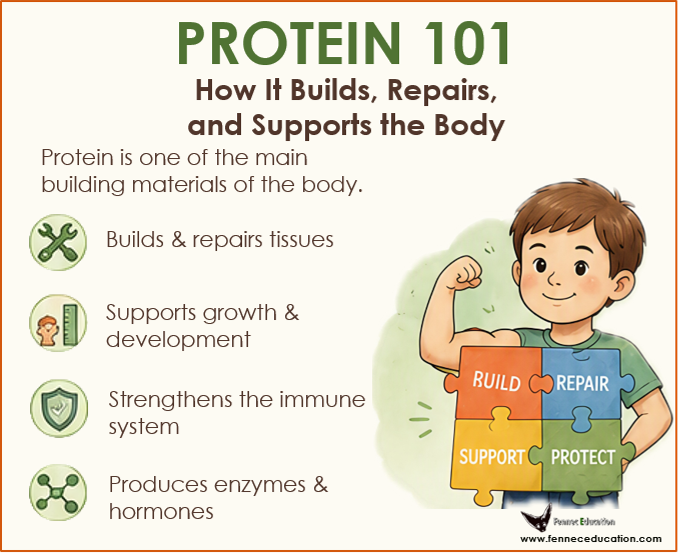
Protein is often associated with one thing: muscles. But in reality, especially for children, protein plays a much broader role. It is essential for:
- Growth and development
- Repairing tissues
- Supporting the immune system
- Producing enzymes and hormones
👉 In simple terms: Protein is one of the main building materials of the body.
🧬 What Is Protein?
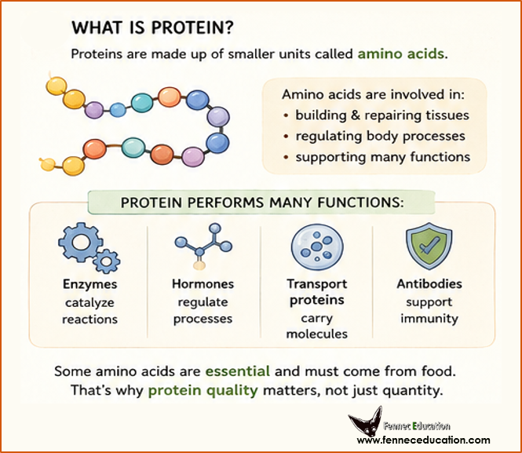
Proteins are made up of smaller units called amino acids. These amino acids are involved in:
- The formation of body tissues (e.g., muscle, skin, organs)
- The repair of damaged cells
- The regulation of metabolic and physiological processes
Proteins also perform a wide range of functional roles in the body:
- Enzymes → catalyze biochemical reactions
- Hormones → regulate physiological processes (e.g., insulin)
- Transport proteins → carry molecules (e.g., hemoglobin transports oxygen)
- Antibodies → support immune defense
Some amino acids can be produced by the body, while others, called essential amino acids, must come from food.
👉 This is why protein quality matters, not just quantity.
🔬 What Happens After We Eat Protein? (Digestion and Absorption)
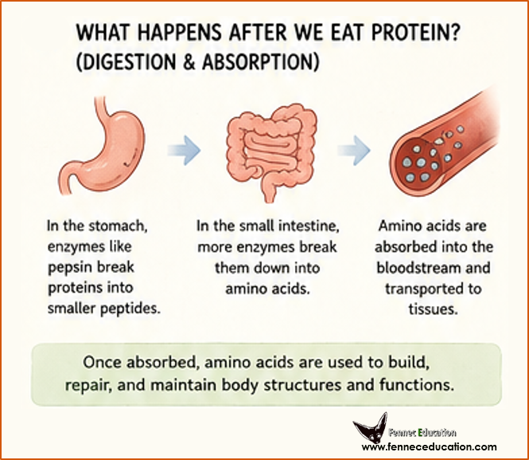
After consumption, proteins undergo digestion before they can be used by the body.
• In the stomach, enzymes such as pepsin begin breaking proteins into smaller peptides
• In the small intestine, additional enzymes (proteases) further break them down into amino acids
• These amino acids are then absorbed into the bloodstream and transported to tissues
👉 Once absorbed, amino acids are used to build, repair, and maintain body structures and functions.
⚙️ Protein Turnover — A Dynamic Process
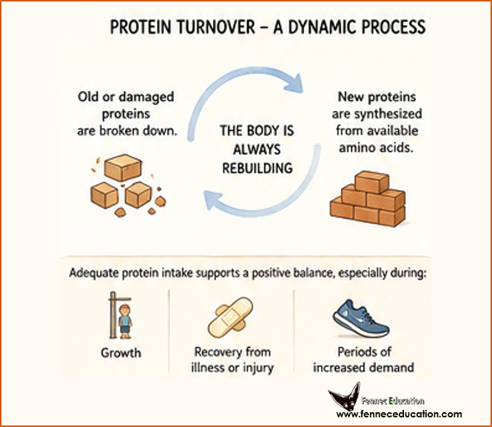
The body is in a constant state of protein turnover, meaning that proteins are continuously broken down and rebuilt.
• Old or damaged proteins are degraded
• New proteins are synthesized from available amino acids
👉 Adequate protein intake supports a positive balance, which is especially important during:
• Growth (children and adolescents)
•Recovery from illness or injury
• Periods of increased physical demand
📊 How Much Protein Do We Need?
Protein requirements vary depending on age, physiological state, and activity level. General guidance:
• Adults: ~0.8–1.0 g per kg of body weight per day
• Children and adolescents: higher needs due to growth
• Athletes or highly active individuals: increased requirements
👉 Rather than focusing on exact numbers, the key is regular and sufficient intake adapted to individual needs.
🧩 Not All Proteins Are the Same
Proteins differ in the types and proportions of amino acids they contain.
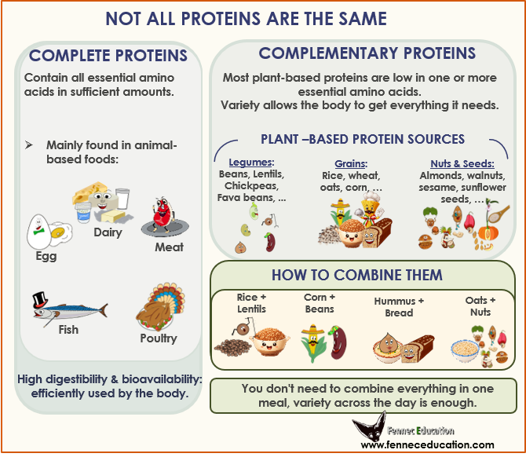
1- 🥚 Complete proteins
Complete proteins contain all essential amino acids in sufficient amounts.
👉 They are mainly found in animal-based foods, such as:
- Eggs
- Dairy
- Meat
- Fish
- Poultry
These proteins typically have high digestibility and bioavailability, meaning they are efficiently used by the body.
2- 🌱 Complementary proteins
Most plant-based proteins are relatively low in one or more essential amino acids. However, combining different sources allows them to complement each other.
🧩 Common plant-based protein sources
- Legumes → lentils, chickpeas, beans, fava beans
- Grains → rice, wheat, oats, corn
- Nuts & seeds → almonds, walnuts, sesame, sunflower seeds
🔗 How to combine them
Combining different plant foods helps provide a more complete protein profile. Examples:
- Rice + lentils
- Bread + hummus
- Beans + corn
- Oats + nuts or seeds
👉 The key idea:
- You don’t need to combine everything in one meal, variety across the day is enough.
- Variety allows the body to get everything it needs.
🥩🌱 Animal and Plant Proteins — Understanding the Difference
Protein sources differ not only in composition, but also in how they interact with the body.
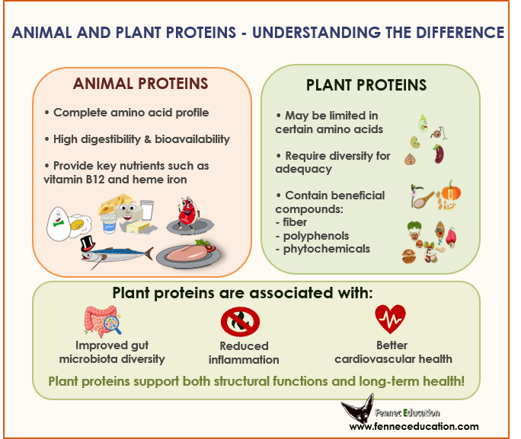
🥩 Animal Proteins
- Complete amino acid profile
- High digestibility and bioavailability
- Provide key nutrients such as vitamin B12 and heme iron
🌱 Plant Proteins
- May be limited in certain amino acids
- Require diversity for adequacy
- Contain beneficial compounds:
- Fiber
- Polyphenols
- Phytochemicals
These are associated with:
- Improved gut microbiota diversity
- Reduced inflammation
- Better cardiovascular health
👉 ❤️ Plant proteins support both structural functions and long-term health.
⚖️ Quantity Depends on the Source
Not all protein sources contribute in the same way; it depends on both quality and dietary composition.
👉 This means that some meals may require:
- Slightly larger portions
- Greater variety
💡 Example:
A meal based on legumes becomes more complete when combined with grains.
🥛 Protein Distribution and Satiety
Protein intake is most effective when distributed throughout the day, rather than consumed in a single meal. Benefits of regular protein intake across meals:
- Supports continuous protein synthesis
- Helps maintain muscle mass
- Promotes satiety (feeling of fullness)
- Contributes to stable energy levels
Protein influences hunger by regulating satiety hormones and slowing digestion compared to simple carbohydrates.
👉 Practical tip: include a protein source at each meal and snack.
🥚 A Special Focus on Eggs
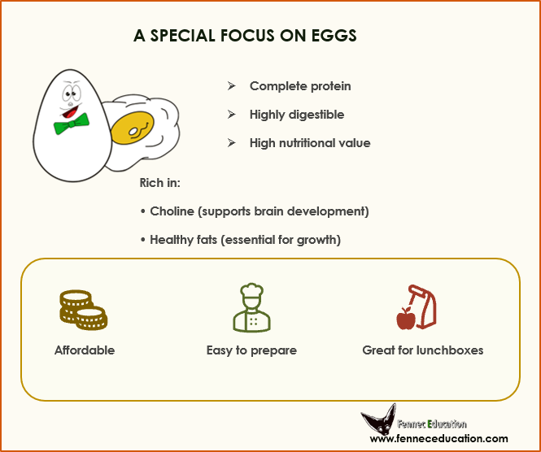
Eggs are one of the most efficient and practical sources of protein. They:
- Contain all essential amino acids
- Are highly digestible
- Have a high nutritional value
They also provide important nutrients such as:
- Choline, which supports brain development
- Healthy fats, essential for growth
👉 In addition, eggs are:
- Affordable
- Easy to prepare
- Convenient for lunchboxes
💡 Example:
- Boiled eggs for snacks or school meals
- Omelets with vegetables
- Egg-based muffins
🥗 What About Vegetarian Diets?
A vegetarian diet can provide enough protein, but it requires attention to variety. Key points:
- Combine plant protein sources
- Include legumes regularly
- Diversify grains, nuts, and seeds
- Pay attention to nutrients like iron and vitamin B12
👉 The goal is diversity over time rather than perfect combinations at each meal.
⚠️ Common Misconceptions About Protein
Several common beliefs about protein are not entirely accurate:
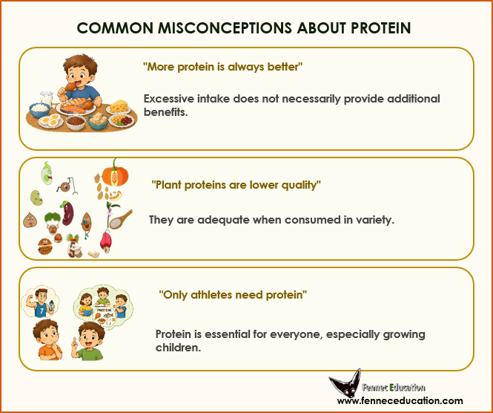
- “More protein is always better” → excessive intake does not necessarily provide additional benefits. As previously mentioned, protein can be quite satiating. That’s generally useful, but young children have small stomachs and limited appetites. Unnecessarily large portions of protein-rich foods may fill them up before they’ve eaten enough of the other components of the meal. As a result, they may eat less:
- Whole grains and other carbohydrate-rich foods, which provide an important source of energy for growth, activity, and the brain.
- Fruits and vegetables, reducing their intake of dietary fiber — which helps nourish the gut microbiota — as well as vitamins, minerals, and the wide range of phytochemicals discussed in our previous article.
- Healthy fat sources, which are particularly important during childhood for energy, cell membranes, and normal development.
- “Plant proteins are lower quality” → Plant proteins can provide all the essential amino acids the body needs when different sources are eaten in sufficient amounts and variety. Legumes, grains, nuts, and seeds can complement one another, which is why diversity matters more than relying on a single plant protein source.
- “Only athletes need protein” → Protein is essential for everyone, not just for building bigger muscles. Growing children particularly need it because their bodies are continuously building and repairing tissues and producing enzymes, hormones, and components of the immune system.
👉 Understanding these points helps promote balanced and informed dietary choices.
⚠️ A special consideration: People with impaired kidney function may need their protein intake carefully adjusted under medical supervision.
Everyday strategies:
- Include a protein source at each meal
- Mix animal and plant sources when possible
- Use simple combinations (lentils + rice, yogurt + nuts, eggs + vegetables)
- Vary foods throughout the week
💡 Examples:
- School lunch: whole grain sandwich + chicken breast + hummus + vegetables
- Dinner: lentils with rice + salad
- Snack: yogurt with fruit
✨ Final Thought
Protein is not just about eating more. It is about:
- Selecting diverse protein sources
- Understanding how the body digests and uses them
- Distributing intake throughout the day
- And building meals that support both growth and long-term health
👉 Because in nutrition, quality and balance matter just as much as quantity
📚 References
- World Health Organization / Food and Agriculture Organization / United Nations University. (2007). Protein and Amino Acid Requirements in Human Nutrition. WHO Technical Report Series 935.
→ Foundational reference on protein requirements, essential amino acids, protein quality, and needs throughout different stages of life. - Food and Agriculture Organization of the United Nations. (2013). Dietary Protein Quality Evaluation in Human Nutrition. FAO Food and Nutrition Paper 92.
→ Key scientific report on protein quality, amino acid digestibility and the DIAAS approach for evaluating dietary proteins. - Institute of Medicine. (2005). Dietary Reference Intakes for Energy, Carbohydrate, Fiber, Fat, Fatty Acids, Cholesterol, Protein, and Amino Acids. National Academies Press.
→ Provides reference intakes for protein and amino acids across the lifespan and explains their physiological roles. - European Food Safety Authority (EFSA). (2012). Scientific Opinion on Dietary Reference Values for Protein. EFSA Journal, 10(2), 2557.
→ European scientific guidance on protein requirements for adults, infants, children, adolescents, pregnancy and lactation. - Harvard T.H. Chan School of Public Health. Protein — The Nutrition Source.
→ Accessible evidence-based overview of protein sources, protein quality, the importance of the overall “protein package,” and long-term health. - Naghshi, S., Sadeghi, O., Willett, W. C., & Esmaillzadeh, A. (2020). Dietary intake of total, animal, and plant proteins and risk of all cause, cardiovascular, and cancer mortality: systematic review and dose-response meta-analysis of prospective cohort studies. BMJ, 370, m2412.
→ Large systematic review and meta-analysis supporting the association between greater plant-protein intake and lower all-cause and cardiovascular mortality in adults. - Verduci, E., et al. (2025). Vegan diet and nutritional status in infants, children and adolescents: A position paper based on a systematic search by the ESPGHAN Nutrition Committee. Journal of Pediatric Gastroenterology and Nutrition, 81(5), 1318–1345.
→ Recent pediatric guidance on vegan diets, growth and nutritional adequacy, including nutrients requiring particular attention in children and adolescents. - Melina, V., Craig, W., & Levin, S. (2016). Position of the Academy of Nutrition and Dietetics: Vegetarian Diets. Journal of the Academy of Nutrition and Dietetics, 116(12), 1970–1980.
→ Supports the nutritional adequacy of appropriately planned vegetarian diets across life stages and discusses plant protein sources and nutrients requiring attention. - National Institutes of Health, Office of Dietary Supplements. Choline — Fact Sheet for Health Professionals.
→ Evidence-based information on choline’s physiological functions, requirements and food sources, including eggs. - U.S. Department of Health and Human Services & U.S. Department of Agriculture. (2026). Dietary Guidelines for Americans, 2025–2030. 10th Edition.
→ Current U.S. dietary guidance on meeting nutritional needs through balanced dietary patterns and nutrient-dense foods.